A Lawn Jockey Could Be Yours!
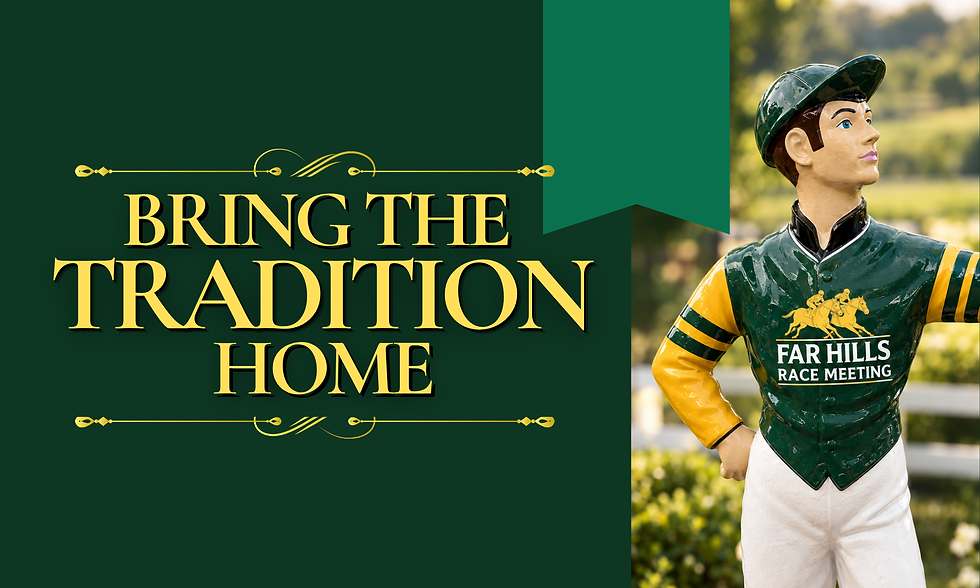
Enter our drawing for a chance to win a hand-painted See Your Colors™ lawn jockey. Sign up with your name and contact information, and stay tuned for when we announce the lucky winner in December 2027.
908-339-5060 TO ORDER

Customize your lawn jockey with your racing silks, your alma mater, your favorite team or too match your decor!

Showcase your hero on a lawn jockey! The Seabiscuit story is famous for a reason. Let that legacy shine in your decor.
908-339-5060 TO ORDER
Where equestrian tradition, craftsmanship, and personal legacy come together... and Tradition Meets Artistry...
A Lawn Jockey has always represented more than a decorative figure. For generations, these iconic sculptures have welcomed guests to distinguished estates, celebrated racing heritage, and stood as symbols of hospitality, tradition, and pride. At See Your Colors™, every Lawn Jockey is individually handcrafted, hand-finished, and created as a lasting piece of estate sculpture.
Built upon the legendary 1954 patented mold design and refined through three generations of stone-casting expertise, our Lawn Jockeys are created using a proprietary cast stone process engineered for strength, beauty, and longevity. These are not mass-produced lawn ornaments. They are handcrafted heirloom pieces designed for those who appreciate exceptional materials, timeless design, and the traditions of the equestrian world.
Crafted For Those Who Know The Difference - each Lawn Jockey can be created to reflect your story:
-
Classic solid-color estate designs
-
Historic racing silks
-
Famous champion-inspired colors
-
Saratoga and racetrack collections
-
Family heritage designs
-
Hunt club and equestrian traditions
-
Custom commissions for farms, estates, and collectors
Whether displayed at a private residence, horse property, historic home, or equestrian estate, every See Your Colors Lawn Jockey is created to become part of the landscape and part of the story.
The Art Of The Commission A handcrafted Lawn Jockey is not selected from a shelf. It begins with a conversation. Because every piece is individually created, we personally guide each client through the design process, production schedule, finishing details, and delivery. Our commissions are limited by craftsmanship, not inventory.
To discuss your Lawn Jockey, reserve a commission, or inquire about availability:
Call or text 908-339-5060
Heritage. Craftsmanship. Legacy. From the traditions of Saratoga to the historic Far Hills Race Meeting, See Your Colors™ celebrates the enduring connection between horses, heritage, and home. A true Lawn Jockey is not simply purchased. It is commissioned.
See Your Colors™ - where your story stands tall.






Gallery Hours
Monday - Friday
Saturday
Sunday
Call/Text 908-339-5060 or check our
Pop Calendar here


Our
Story

Early Origins: The Legend of Jocko Graves
One of the most enduring myths surrounding lawn jockeys dates back to the American Revolutionary War. The story centers around a young African American boy named Jocko Graves, who is said to have been a devoted servant of General George Washington.
According to legend, in the winter of 1776, Washington was preparing to cross the Delaware River for a surprise attack against the Hessians in Trenton, New Jersey. Jocko, eager to assist, was tasked with holding a lantern on the riverbank to guide the troops back. Tragically, the young boy reportedly froze to death while faithfully carrying out his duty. Moved by his loyalty, Washington allegedly commissioned a statue in Jocko’s likeness, which became known as the “Faithful Groomsman.”
While this story is widely told, there is no historical evidence to confirm it. Many historians consider it to be more of a romanticized folktale rather than a factual account. However, the legend contributed to the perception of lawn jockeys as symbols of devotion and service.
The History of Lawn Jockeys: From Origins to Modern Perspectives
Lawn jockeys are a unique and often controversial aspect of American decorative history. These small, human-like statues, typically made of cast iron or concrete, have adorned front yards, driveways, and estates for over two centuries. While some view them as quaint or nostalgic pieces of Americana, others see them as relics of a racially fraught past. This article will delve into the history of lawn jockeys, tracing their origins, cultural significance, and the evolving interpretations of their symbolism.

The Rise of Lawn Jockey Statues in the 19th Century
By the 1800s, small iron statues resembling the so-called Jocko figures began appearing on the front lawns of wealthy estates, particularly in the Southern United States. During this period, lawn jockeys served a practical purpose—they functioned as hitching posts where visitors could tie their horses. The statues were often placed near driveways or in front of stables, making them both decorative and functional.

Two Styles of Lawn Jockeys Emerge
As their popularity grew, lawn jockeys began appearing in two distinct styles:
Jocko
-
These figures were often depicted as young Black men, dressed in jockey attire, holding a lantern or hitching ring.
-
Typically painted with exaggerated features, including wide eyes and red lips.
-
Most associated with the “Faithful Groomsman” legend.
Cavalier
-
Introduced later, these statues depicted white men in jockey uniforms, often with a more neutral facial expression.
-
This style became popular in the 20th century, especially after racial sensitivities around the original versions increased.
Lawn Jockeys and the Underground Railroad: Fact or Fiction?
Some historians and enthusiasts argue that lawn jockeys played a secret role in the Underground Railroad, the covert network that helped enslaved people escape to freedom in the North before the Civil War. According to this theory:
-
Runaway slaves used the statues as signals to identify safe houses along their journey.
-
A red ribbon or cloth tied around the jockey’s arm meant "danger—do not stop here."
-
A green ribbon or cloth indicated a safe haven.
While this theory is compelling and often repeated, there is little concrete historical evidence to support it. Most accounts rely on oral tradition rather than documented proof. Nonetheless, the idea that some lawn jockeys may have been used as covert markers for escaping slaves adds an additional layer of complexity to their history.
